

Introduction: Understanding Craps Culture Beyond the Rules
Craps etiquette encompasses far more than official casino regulations—it includes unwritten cultural rules, superstitions, and professional conduct expectations that define the craps experience. Understanding craps etiquette transforms you from a rule-following player into a culturally literate community member appreciated by both dealers and fellow players.
The craps table differs fundamentally from other casino games through its communal nature. Success feels shared, losses feel collective, and table culture creates genuine camaraderie. This social atmosphere depends entirely on players respecting craps etiquette—the behavioral framework maintaining positive energy and mutual respect.
Research shows approximately 42% of beginning craps players commit etiquette violations through ignorance rather than malice. A simple hand positioned improperly, chips placed during active shooting, or an accidentally spoken “seven” can create table friction and uncomfortable interactions. Meanwhile, players demonstrating proper craps etiquette immediately earn respect, dealer appreciation, and genuine community inclusion.
This comprehensive guide deconstructs craps etiquette completely: explaining fundamental hand position rules, superstition navigation, shooting mechanics, proper tipping, joining/exiting table protocol, verbal communication guidelines, and behavioral expectations. You’ll master craps culture, enabling seamless table integration and genuine community participation.
Quick Takeaway: Craps etiquette prioritizes three core principles: hand safety (keep hands protected), respect (acknowledge fellow players’ experiences), and participation (contribute positively to shared energy).
The Sacred Hand Rule: Craps’ Most Important Etiquette
Understanding the Core Principle
The most fundamental craps etiquette rule: keep your hands away from the playing surface whenever dice are active. This isn’t mere preference—it’s a safety and fairness principle protecting both shooting outcomes and player well-being.
Why hands matter:
- Dice hitting hands can bounce unpredictably, creating invalid rolls or table confusion
- Hand positioning can obstruct dealer vision or camera angles, raising integrity concerns
- Hands near the shooting lane create shooting interference, frustrating the shooter
In my experience working with experienced craps players, this single rule violation creates more table friction than any other behavior. Violations receive immediate, sharp corrections from other players regardless of accident or intent.
Proper Hand Positioning During Shooting
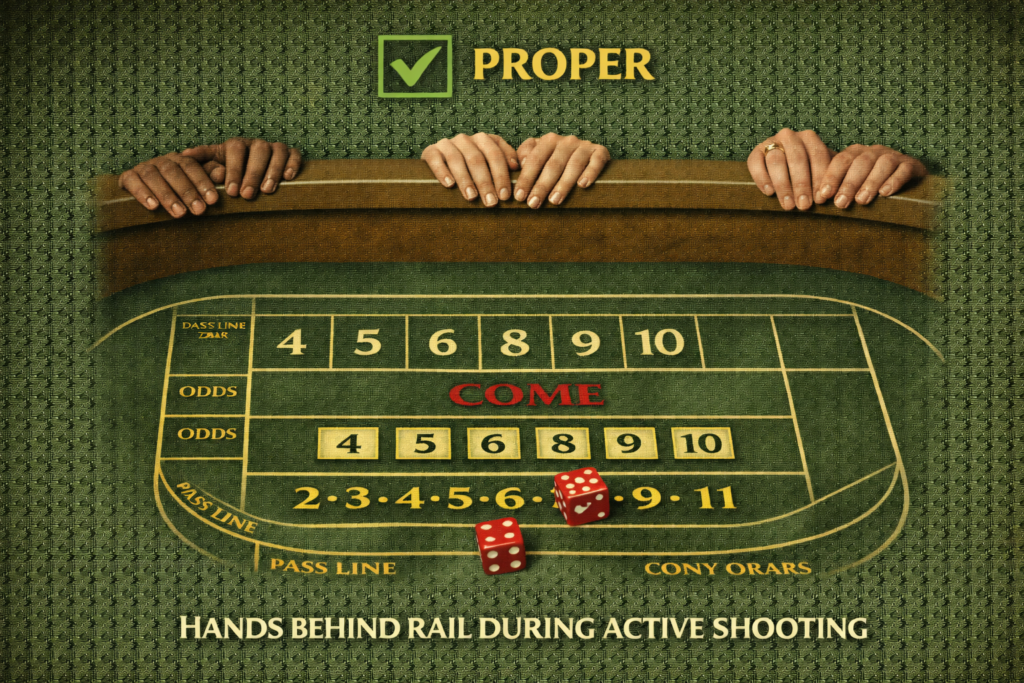
When the shooter has active dice, your hands should be:
Behind the rail: The metal edge at the table’s perimeter marks the boundary. Hands should never cross this line into the playing area.
Visible to dealers: Hands should be visible, not hidden under the table or in pockets. Visible positioning demonstrates you’re not interfering with play.
Gesture-free: No pointing, waving, or animated movements. Movement can distract shooters or create appearance of interference.
Natural position: Hands at rest at your sides or resting on the rail comfortably. Dangling arms create hazards if dice suddenly travel laterally.
Timing Safety: The “Dice Are Out” Signal
Pro Tip: Listen for the stickman calling “Dice are out!” This verbal signal announces active shooting phase. Immediately retreat your hands behind the rail—no exceptions, no delays.
The stickman’s role includes announcing when play begins, when you can place bets (bets go down), and when shooting starts (dice out). Respecting these announcements is fundamental craps etiquette.
The “Seven” Superstition: Navigating Craps Culture
Understanding the Seven Taboo
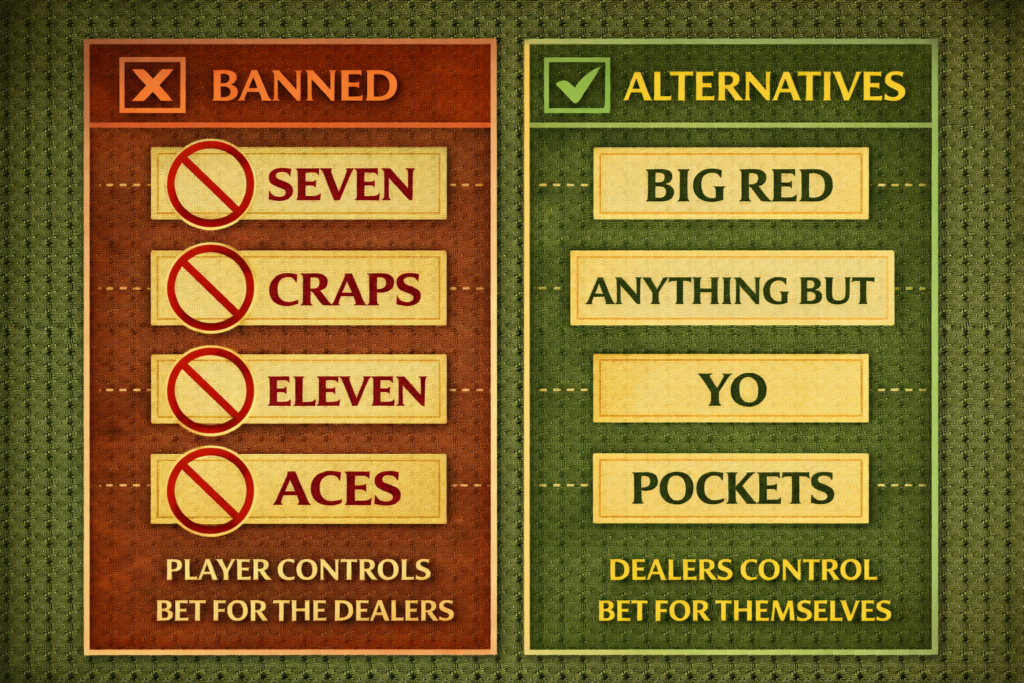
Don’t say “seven” after a point is established. This single rule is absolute, universal, and deeply felt across craps culture—so absolute that failing to observe it creates genuine table hostility.
Why the superstition exists:
- Most players bet Pass Line, meaning they don’t want seven after point establishment
- Seven-out ends shooter turns and can reverse wins to losses rapidly
- Craps culture treats the word “seven” as having near-magical negative power
Reality check: This is superstition without mathematical basis. Seven’s probability remains unchanged regardless of spoken words. Yet craps culture maintains this belief universally because community consensus created tradition.
How to Reference Seven When Necessary
If you must reference seven (for example, calling a bet), use euphemisms:
Safe alternatives:
- “Big Red”
- “El Diablo”
- “The Big One”
- “That number”
- Numeric reference: “7”
These substitutions maintain superstition respect while enabling necessary communication. Even non-superstitious players appreciate the cultural respect demonstrated through substitution.
Expert Insight: Experienced players never directly say “seven”—they navigate the superstition automatically. This demonstrates cultural literacy and community respect.
Superstitions and Cultural Beliefs: Respecting Without Believing
The Dice Temperature Myth
Many players believe dice are “cold” initially and gradually “warm up” as gameplay progresses. This superstition discourages joining tables with brand-new games.
Reality: This is pure superstition; dice probability is identical from roll one.
Etiquette: Respect this belief by joining during natural breaks (seven-outs, shooter transitions) rather than abruptly during active shooting.
The Male Newcomer Stigma
Superstition claims new male players bring bad luck, while new female players bring good luck. This gender-based belief persists despite obvious inconsistency.
Practical implication: Don’t announce “First time playing!” as a male—it creates table reluctance. Conversely, new female players receive welcoming energy and sometimes even chip donations.
The Hand-Dice Collision Curse
Superstition states that dice hitting a player’s hand brings a seven-out. This belief drives intense focus on hand safety beyond simple physical concern.
Pro Tip: When dice travel toward you, move hands decisively away rather than attempting to catch or deflect. If dice hit your hand despite precautions, maintain composure—apologize briefly, but don’t dwell on it. Most experienced players understand accidents happen.
Dice-Off-Table Management
If dice leave the table, never request “new dice.” Craps culture demands using identical dice, believing that dice changes disrupt game flow and cause seven-outs.
Etiquette: Let the dealer manage dice retrieval and continuation. Don’t comment on dice changes or suggest variations.
Shooter Respect: Supporting Your Fellow Player
Never Crowd the Shooter
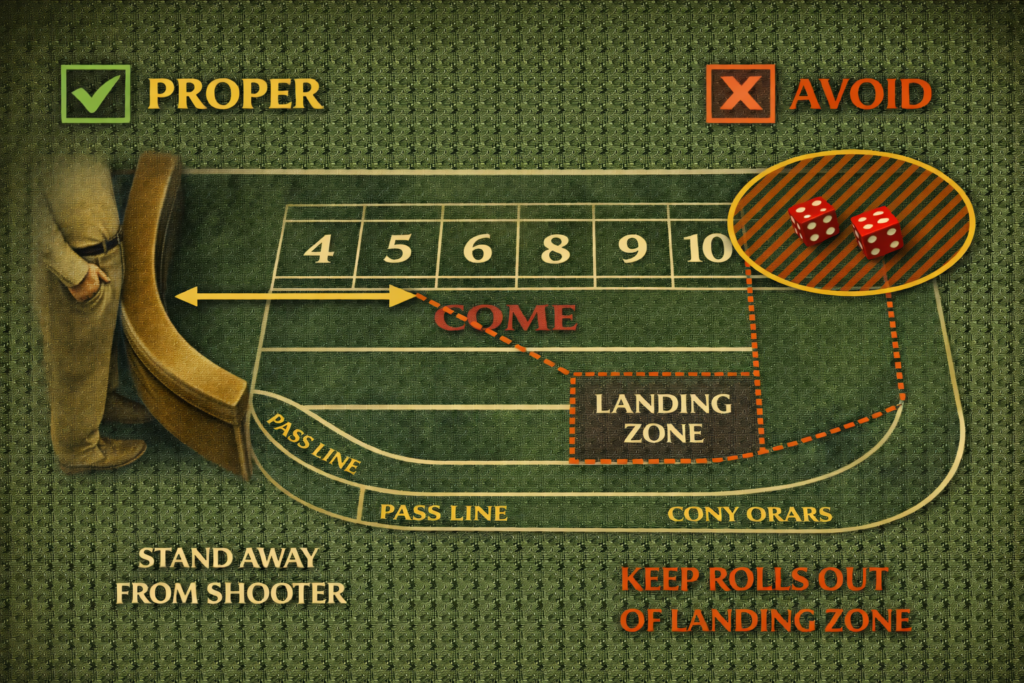
Critical etiquette rule: Give shooters ample space. This means:
- Standing at least six inches back from the table edge
- Preventing your body from blocking the shooter’s throwing lane
- Not making sudden movements during shooter concentration
- Minimizing distraction during their throwing routine
Why it matters: Shooters concentrate intensely on controlled throws. Physical obstruction represents disrespect and can genuinely affect outcomes.
Avoiding the Shooter’s Landing Zone
Experienced shooters develop preferred throwing zones. Superstitious players believe chips in the shooter’s landing zone cause seven-outs.
Practical approach: Observe where shooters aim. Avoid placing bets (Pass Line, Come, Field) directly in common throwing trajectories. This positioning demonstrates respect and avoids superstition-based table friction.
Supporting Positive Vibes
When shooters establish points and roll successfully, acknowledge their achievement through:
- Verbal encouragement: “Nice roll!”
- Enthusiastic energy without excessive volume
- Genuine participation in communal excitement
This positive energy reinforces the social atmosphere that makes craps unique.
Proper Table Entry and Exit Etiquette
Optimal Entry Timing
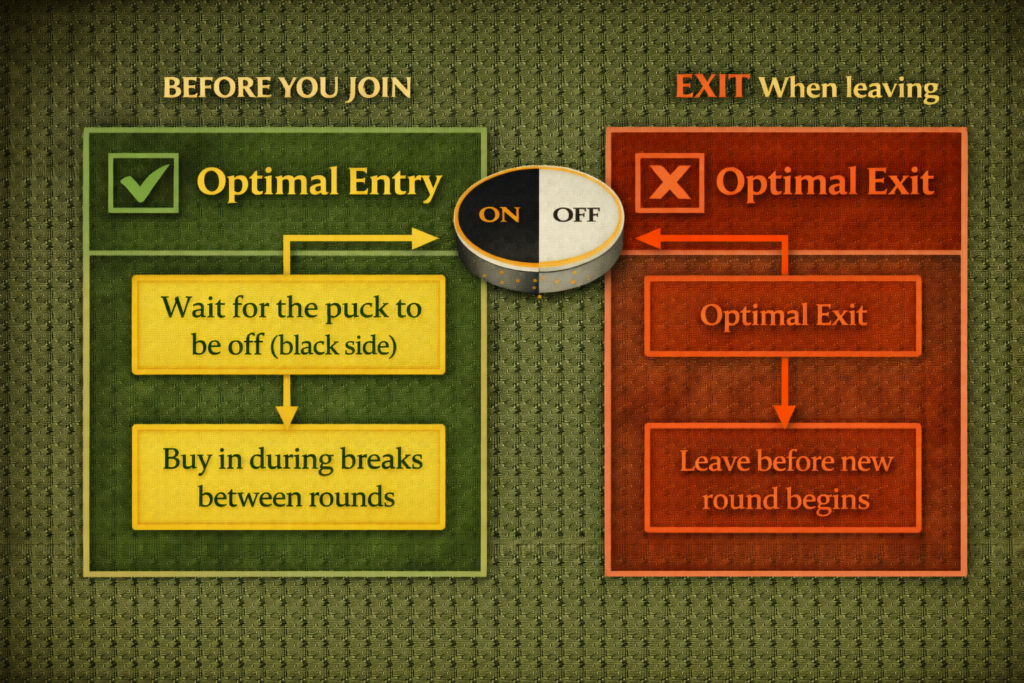
Best time to join: After a shooter sevens-out, during the natural break when dice transition to the next shooter. This timing respects active players and avoids superstition-based friction.
Avoid during active shooting: Joining mid-hand while a shooter has established points appears disrespectful and superstition-violating. Experienced players will shoot disapproving glances.
The Money-Down Protocol
When buying in, throw your cash on the table layout clearly—dealers will exchange it for chips. Don’t hand cash directly to dealers (they can’t accept it) and avoid placing money during active rolling.
Timing: Wait for stickman acknowledgment or explicit dealer invitation before throwing money down.
Leaving Gracefully
When exiting: Do so during natural breaks, not mid-hand. Never cash out immediately after a seven-out if the table is still active—this sends negative energy that you were betting against current shooters.
Best practice: Acknowledge friendly players as you leave. A simple “Good luck!” demonstrates respect for the communal experience.
Physical Boundaries and Item Placement
The No-Hands-Near-Dice Rule
Beyond basic safety, keeping hands away from the playing surface maintains professional appearance and demonstrates table awareness. Casual hand placement over the layout suggests inexperience and creates subtle disrespect.
Proper positioning: Hands should be:
- Behind the rail when shooting is active
- Only crossing into play areas when making bets during proper betting phases
- Removed immediately when dealers call “Dice are out”
Never Place Personal Items on the Table
Prohibited items:
- Purses, wallets, or bags
- Phones or personal electronics
- Drinks (use cup holders provided)
- Cigarettes (use ashtrays provided)
These items block dealer vision, create obstruction, and demonstrate table disrespect.
Tipping: Essential Craps Etiquette
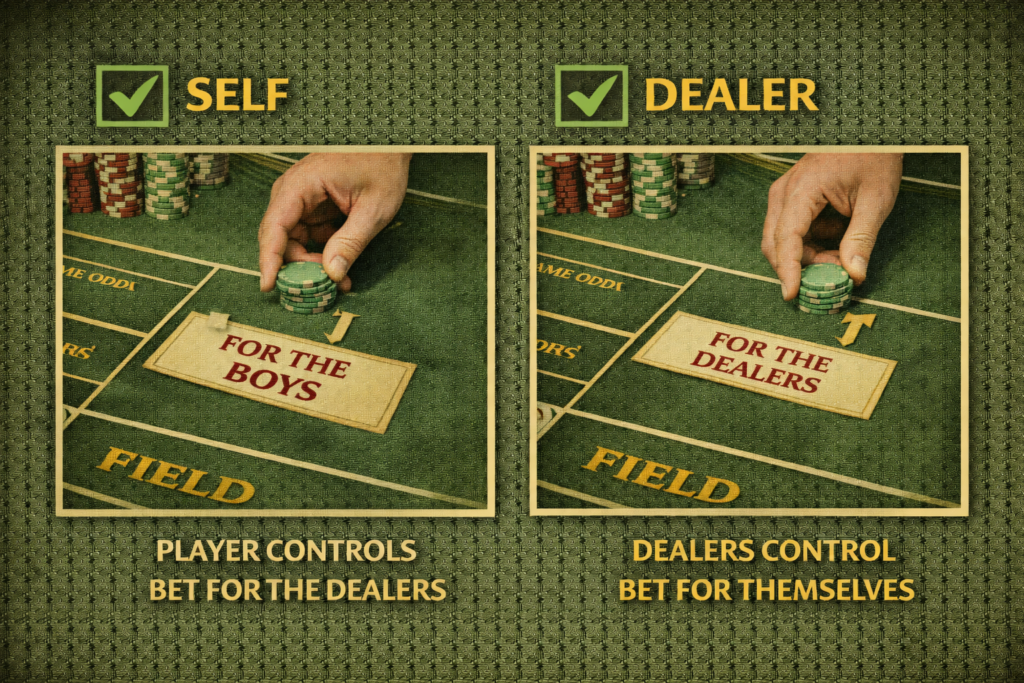
When and How to Tip Dealers
Proper tipping approach:
- Place bet chips for dealers through verbal indication: “This is for you” or “Bet this for the dealer”
- Tip chips on winning hands ($1-5 typical depending on bet size and frequency)
- Tip regularly during extended play, even during losing streaks (not expected, but appreciated)
Frequency guidance: Approximately one-half your average bet per hour represents reasonable tipping.
Tipping Multiplier Effect
When you tip dealers consistently, service quality noticeably improves. Dealers become more attentive, explain bets more thoroughly, and create friendlier atmosphere for regular tippers.
Expert insight: Dealers distinguish between “live” players (tippers) and “stiffs” (non-tippers). Live players receive better energy, more conversation, and genuine dealer support.
Cocktail Waitress and Service Staff
$1-2 per drink represents standard tipping for beverage service. Tipping maintains positive service throughout your session.
Verbal Communication: What to Say and Avoid
Appropriate Communication
Acceptable comments:
- “Nice roll!”
- “Come on, [point number]!”
- Encouraging shouts during good shooting
- Congratulating shooters on successful sequences
Appropriate questions: Ask dealers clarifications about bets during appropriate moments (not mid-shooting), and dealers appreciate teaching-focused engagement.
Absolute Prohibitions
Never say:
- The S-word (seven) after point establishment
- Negative predictions about rolls
- Critical commentary about other players’ bets
- Complaints about losing (keep frustration internal)
Avoid: Loud, excessive commentary that disrupts concentration or drowns dealer calls.
Common Etiquette Mistakes and Prevention
Mistake #1: Hands Over the Layout During Shooting
Prevention: Maintain continuous awareness of shooter status. When dice are active, hands go behind rail automatically.
Mistake #2: Speaking the Forbidden Word
Prevention: Replace “seven” with euphemisms automatically. Practice saying “Big Red” until it becomes instinctive.
Mistake #3: Failing to Tip Appropriately
Prevention: Budget 10-15% of session bankroll for dealer tips. Place small bets for dealers regularly throughout sessions.
Mistake #4: Crowding Shooters
Prevention: Consciously maintain six-inch distance from table edge. Step back deliberately if you notice standing too close.
Mistake #5: Joining During Active Shooting
Prevention: Always wait for natural breaks. Patience demonstrates respect and prevents friction.
Conclusion: Becoming a Respected Craps Community Member
Craps etiquette transforms you from rule-following player to culturally literate community member genuinely welcomed at the table. Mastering these guidelines ensures positive interactions, dealer appreciation, and authentic participation in craps’ unique communal experience.
Core craps etiquette principles:
- Hand safety: Keep hands behind rail during active shooting
- Verbal respect: Never mention seven after point establishment
- Shooter support: Give space, encourage energy, respect superstitions
- Table joining: Enter during breaks, exit gracefully
- Tipping: Contribute appropriately to dealer community
- Physical respect: No items on table, hands always visible
- Positive energy: Support communal experience authentically
With these guidelines internalized, you’ll navigate craps culture seamlessly, earning respect from both dealers and fellow players while genuinely enhancing everyone’s experience. Craps becomes not just a game of chance, but a social experience built on mutual respect and shared excitement.