

Introduction: Understanding the Diverse Slot Machine Landscape
The casino floor features an overwhelming variety of types of slot machines, yet most players don’t understand fundamental distinctions between them. From nostalgic classic slots with mechanical reels to elaborate video slots with dozens of paylines, and life-changing progressive jackpot slots, each slot machine type offers fundamentally different gameplay, odds, and experiences.
Research shows approximately 58% of slot players cannot explain the difference between classic slots and video slots beyond visual appearance. This knowledge gap leads to poor machine selection, unrealistic expectations, and suboptimal entertainment value. Understanding slot machine types enables informed selection aligned with your bankroll, risk tolerance, and entertainment preferences.
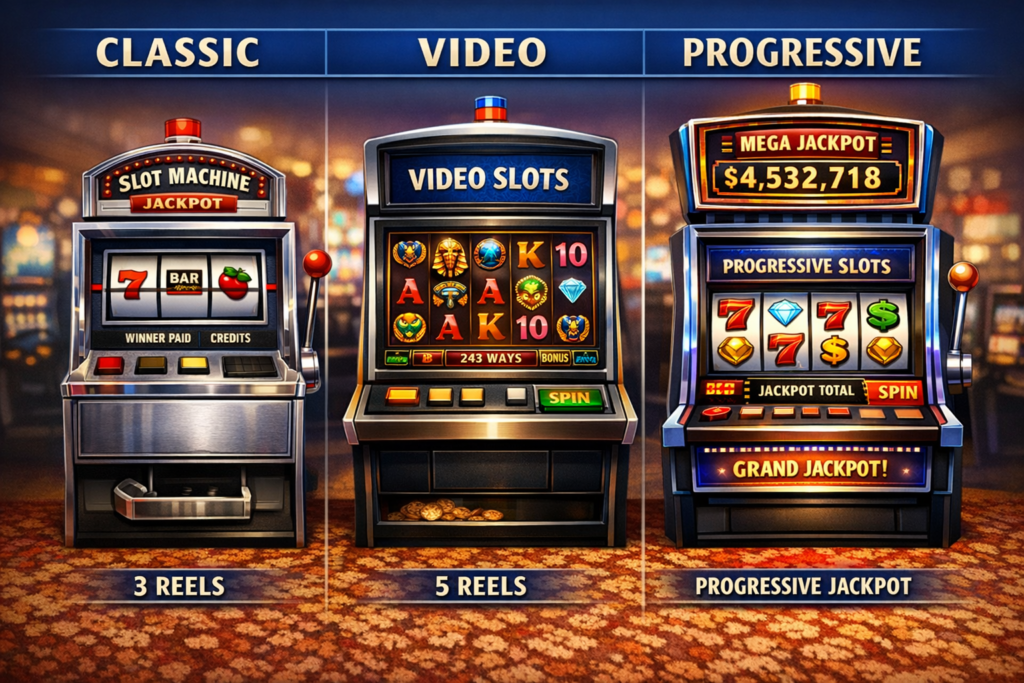
Types of slot machines divide into three primary categories with distinct characteristics: classic slots (simplicity and nostalgia), video slots (complexity and features), and progressives (massive jackpots). Each category carries unique mechanics, payouts, volatility profiles, and strategic considerations.
This comprehensive guide deconstructs all major types of slot machines: explaining mechanical differences, game features, payout structures, odds comparison, and strategic selection frameworks. You’ll understand exactly how different slot machine types operate and which aligns best with your specific preferences and bankroll.
Quick Takeaway: Three primary slot machine types exist: Classic slots (3 reels, 1 payline, simple), Video slots (5+ reels, 20+ paylines, complex), Progressives (linked machines, growing jackpots). Each offers different odds, experience, and volatility. Selection depends on bankroll, entertainment preference, and risk tolerance.
Classic Slots: The Foundation of Slot Gaming
Defining Classic Slot Characteristics
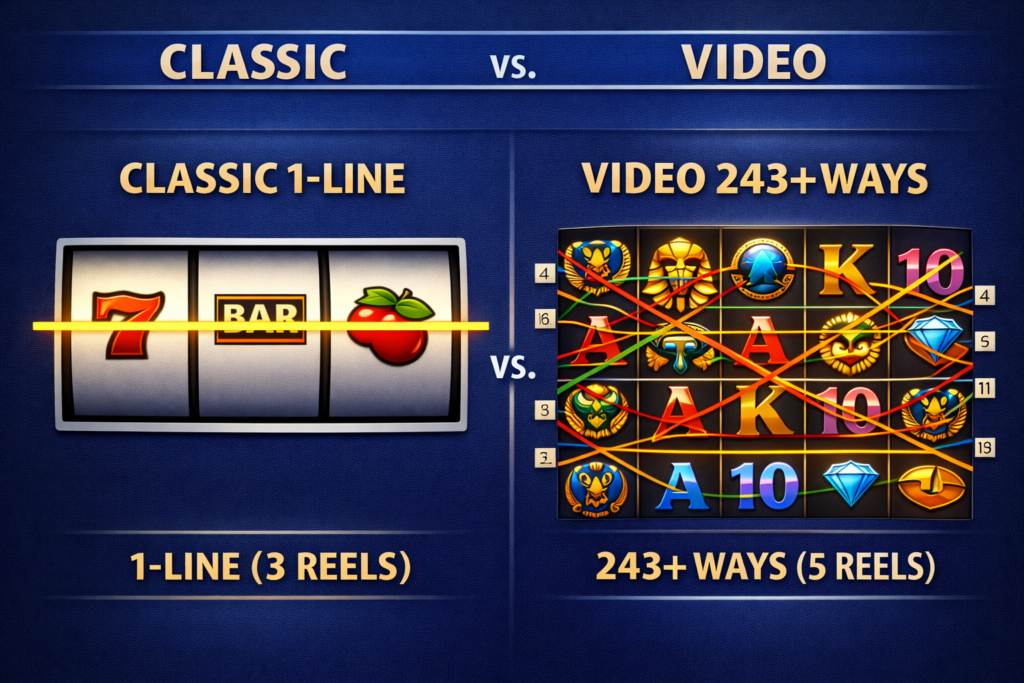
Classic slots are simplest in design and operation. They feature three vertical reels and typically one payline running horizontally through the middle. The symbols are traditional—fruits, bars, bells, sevens, and cherries representing the original mechanical slot machines from the 1890s.
Core features:
- Three reels (always)
- One payline (typically)
- Simple symbols (fruits, bars, sevens)
- Straightforward gameplay (match three symbols)
- Low volatility (frequent small wins)
Classic slot example: You press spin, three reels rotate, and if they stop on three matching sevens, you win according to the payout table. No bonus rounds, no multipliers, no complex features—pure simplicity.
Why Players Choose Classic Slots
Reason #1: Nostalgic Appeal
Classic slots evoke emotional connections to casino history and simpler times. Many players appreciate the retro aesthetic and straightforward gameplay.
Reason #2: Ease of Understanding
New players gravitate toward classic slots because rules are immediately obvious. No complicated payline systems, bonus triggers, or special features to learn—just spin and match.
Reason #3: Fast Gameplay
Classic slots play quickly without bonus animations, transitions, or decision-making delays. Players complete 60+ spins per hour easily.
Classic Slot Odds and Payouts
Typical characteristics:
- RTP: 90-94% (lower than video slots on average)
- Volatility: Low to medium
- Payouts: Small ($5-$50 typical wins)
- Max jackpot: $500-$2,000 typical
Mathematical reality: Classic slots offer lower RTPs because simplified mechanics limit operator flexibility. Players accept lower returns for simplicity and familiarity.
Video Slots: Modern Gaming Evolution
Defining Video Slot Characteristics
Video slots revolutionized slot gaming through digital technology. They feature 5+ reels and multiple paylines—sometimes 20, 50, 100, or even 243+ ways to win. Digital displays enable elaborate graphics, animations, bonus rounds, and themed entertainment.
Core features:
- Five or more reels (typically 5, 6, or 7)
- Multiple paylines (20-243+ possible winning combinations)
- Advanced graphics and animations
- Themed gameplay (movies, fantasy, sci-fi, etc.)
- Bonus features (free spins, multipliers, mini-games)
- Complex symbols (wilds, scatters, special characters)
Video slot example: You press spin on a 5-reel, 25-payline fantasy-themed slot. Three scatter symbols trigger a free spin round. During free spins, wild symbols appear, creating additional winning combinations. A single spin generates multiple simultaneous wins across different paylines.
Why Video Slots Dominate Modern Casinos
Reason #1: Entertainment Value
Video slots function as mini-video games with storylines, themes, and interactive elements. Players enjoy entertainment value beyond pure gambling mechanics.
Reason #2: Varied Features
Bonus rounds, free spins, multipliers, and special symbols create complexity and excitement impossible with classic slots.
Reason #3: Larger Jackpots
Multiple paylines and complex features enable larger, more varied jackpots than classic slot mechanics support.
Video Slot Odds and Payouts
Typical characteristics:
- RTP: 94-97% (higher than classic slots on average)
- Volatility: Low to high (varies significantly by game)
- Payouts: Highly variable ($10-$500+ common)
- Max jackpot: $5,000-$100,000+ frequent
Professional insight: Video slots offer better average RTP than classic slots because digital technology enables sophisticated payout structures. Players trade simplicity for better odds and entertainment value.
Progressive Jackpot Slots: Chasing Life-Changing Wins
How Progressive Jackpots Function
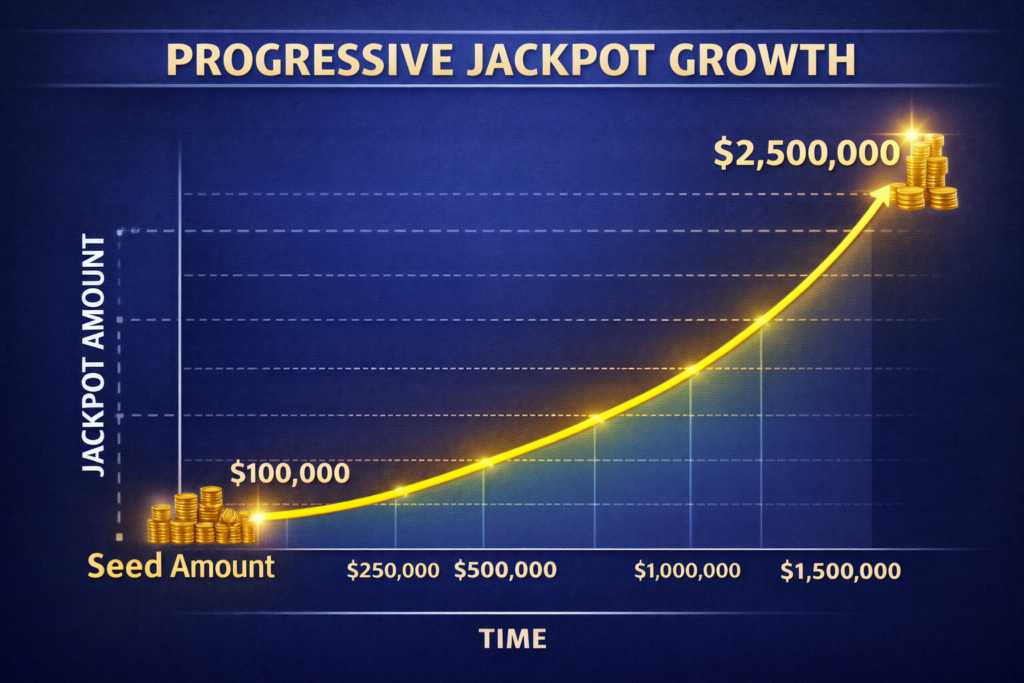
Progressive jackpots accumulate from multiple machines, creating shared prize pools. A small percentage of every bet contributes to the jackpot, which grows continuously until won.
Mechanics:
- Player makes bet (example: $1)
- Small percentage ($0.05) contributes to jackpot pool
- Jackpot grows each spin across all linked machines
- Winning combination triggers jackpot payout
- Jackpot resets to “seed amount” and begins growing again
Real-world example: A linked progressive might start at $100,000. Over thousands of players’ spins, it grows to $250,000, then $500,000, occasionally reaching $1,000,000+ before payout. When won, it resets to seed amount and begins accumulating again.
Types of Progressives
Standalone Progressives:
Single machine accumulating from only its own play. Jackpots grow more slowly; players have better odds if jackpot is modest.
Linked Progressives:
Multiple machines in same casino linked to same jackpot. Jackpots grow faster; odds worsen proportional to participation.
Wide-Area Networked Progressives:
Multiple casinos (sometimes statewide or nationwide) linked to same jackpot. Jackpots reach massive amounts ($5-$10 million+); odds of winning become extremely remote.
Progressive Slot Odds and Considerations
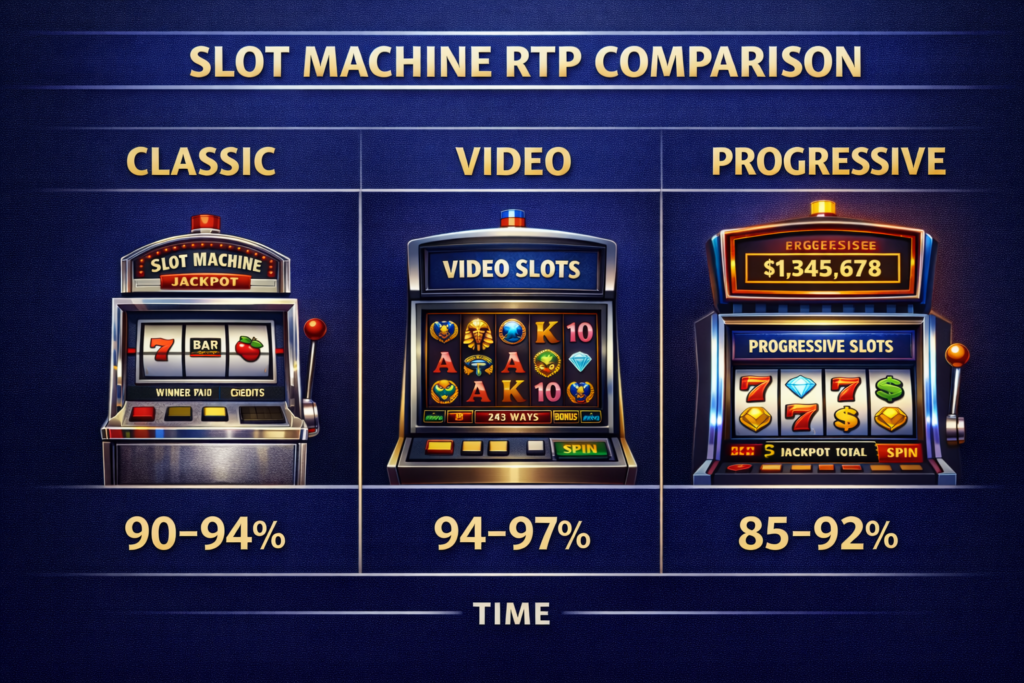
Critical reality: Progressive machines typically have lower base RTPs (85-92%) to fund jackpot accumulation.
Trade-off: You accept lower standard payouts (less frequent small wins) for possible life-changing jackpot.
Expected loss on progressives:
- $1,000 wagered on typical progressive (88% RTP): Expected loss $120
- Same $1,000 on standard video slot (96% RTP): Expected loss $40
- Cost of jackpot dream: $80 additional expected loss
Mechanical vs. Digital: The Technology Divide
Mechanical Slots: Physical Determination
Traditional mechanical slots use springs, gears, and physical mechanisms to determine outcomes. Pulling a lever triggers reels to spin through friction and energy storage.
Characteristics:
- Physical reels physically spin
- Outcome determined by mechanical reel position
- No computer involvement
- Limited payline complexity
- Nostalgic tactile experience
Digital/Video Slots: Software Determination
Modern video slots use Random Number Generators (RNG) and digital displays. Button presses trigger software determining outcomes instantly; reels spinning is purely visual display.
Characteristics:
- Digital display (not physical reels)
- RNG determines outcome instantly
- Display animates predetermined result
- Unlimited payline complexity
- Modern interactive experience
Professional insight: Both systems produce completely random outcomes through different mechanisms. Modern casinos cannot manipulate either—mechanical reel positions or RNG algorithms—without detection. Both offer identical mathematical fairness.
Multi-Payline and Megaways Slots: Advanced Mechanics
Multi-Payline Basics
Traditional slots featured single paylines. Modern video slots offer 20-243+ paylines, enabling numerous simultaneous winning combinations per spin.
How multi-paylines work:
- 5-reel machine with 25 paylines
- Each reel can contribute to multiple winning lines
- A single spin evaluates 25 different symbol combinations
- Multiple simultaneous wins possible on single spin
Megaways Slots: Dynamic Paylines
Megaways represents proprietary technology featuring dynamic reel heights. Each reel can display 2-7 symbols, changing every spin. This creates 15,625+ potential ways to win.
Revolutionary aspect: Payline quantity changes every spin—no two spins are identical. This volatility creates unpredictability and excitement beyond traditional multi-payline slots.
3D and Themed Slots: Entertainment Focus
3D Slots: Visual Immersion
3D slots feature advanced graphics creating three-dimensional environments. Characters, animations, and environments feel immersive rather than flat.
Purpose: Entertainment value beyond standard slots. 3D slots feel like playing video games rather than traditional gambling machines.
Themed Slots: Narrative Integration
Themed slots incorporate popular movie, TV, music, or cultural themes. Game narrative, symbols, and bonus rounds align with themes.
Popular themes: Superhero movies, fantasy worlds, ancient civilizations, famous TV shows, celebrity personalities.
Strategic consideration: Theming doesn’t affect odds; it’s purely entertainment preference.
Choosing Your Slot Machine Type: Decision Framework
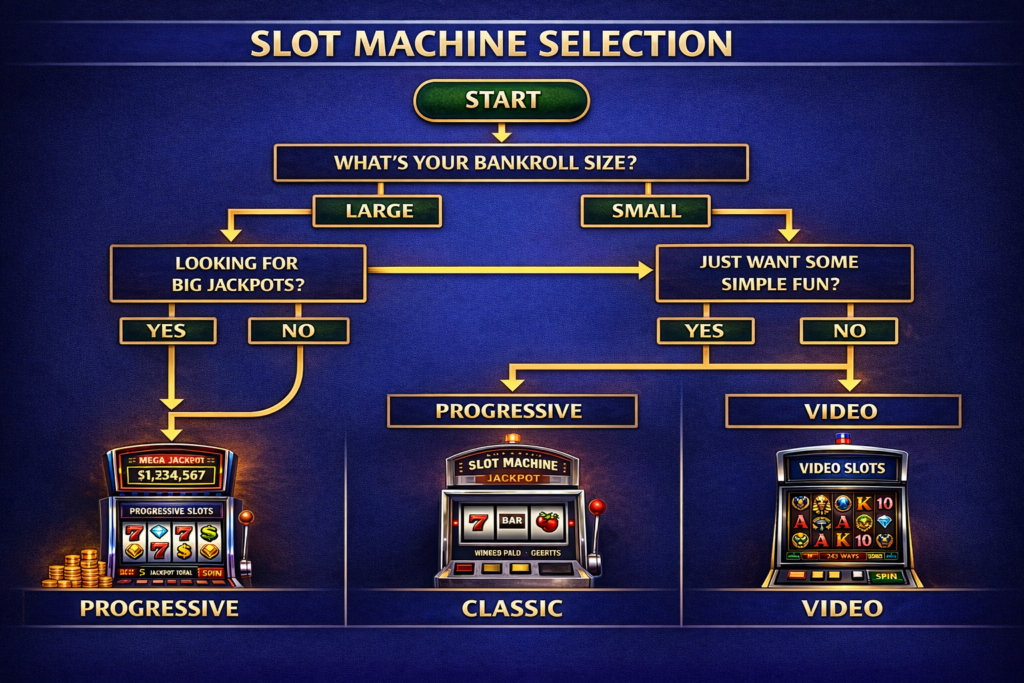
Step 1: Assess Your Bankroll
Limited bankroll (<$300):
- Classic slots (low volatility, extended play)
- Low-volatility video slots
Moderate bankroll ($300-1,000):
- Medium-volatility video slots
- Occasional progressive plays on modest pools
Large bankroll (>$1,000):
- Any volatility type
- Progressive slots with confidence
Step 2: Identify Entertainment Preference
Nostalgia seekers: Classic slots
Action-oriented: Video slots with bonuses
Jackpot chasers: Progressive slots
Complexity lovers: Megaways slots
Step 3: Consider Time Availability
Limited time (30 minutes): Classic slots (faster play rate)
Extended session (2+ hours): Video slots (richer experience)
Jackpot chasing: Progressive slots (time-independent)
Conclusion: Matching Machine Type to Your Profile
Understanding different types of slot machines enables selection aligned with your specific preferences, bankroll, and entertainment goals.
Selection principles:
- Classic slots suit nostalgic players, new players, or those with limited bankrolls seeking extended play
- Video slots appeal to entertainment-focused players seeking complexity, features, and themes
- Progressive slots attract jackpot dreamers willing to accept lower base payouts for potential life-changing wins
- Megaways slots engage complexity-seeking players desiring maximum unpredictability
With these frameworks applied, you’ll navigate casino floors confidently, selecting machines that optimize your specific gaming experience within realistic mathematical constraints.