

Blackjack ace rules are essential for any serious player. The ace is the only card in blackjack with dual value (1 or 11), making it the most strategically powerful card in the deck. Whether you’re a casual player or an aspiring card counter, mastering how to use the ace can significantly improve your odds and turn losing hands into winners. But why is the ace so special? How do professional players leverage its flexibility to dominate the game? And what common mistakes should you avoid when playing with an ace? This in-depth guide covers everything—from basic rules to advanced strategies, statistical probabilities, and casino-specific variations. By the end, you’ll know exactly how to exploit the ace’s full potential at the blackjack table.
What’s an ace in blackjack?

An Ace is one of the four face cards in a standard deck, but unlike Kings, Queens, and Jacks (which are all worth 10), the Ace is dynamic.
Why is the Ace the Most Valuable Card?

- Forms a Natural Blackjack—An ace combined with any 10-value card (10, J, Q, K) instantly makes 21, beating all other hands except a dealer’s blackjack.
- Reduces Bust Risk—Since it can be 1 or 11, it acts as a safety net when hitting (drawing additional cards).
- Creates Soft Hands—A hand with an Ace counted as 11 is called a “soft” hand, giving you more strategic options.
Fun Fact: In single-deck blackjack, the probability of getting an Ace as your first card is 7.69%, but in a 6-deck game, it drops slightly to 7.67% due to card distribution.
How Much Is an Ace Worth? (1 or 11?)

The Ace’s value isn’t fixed—it adapts to give you the best possible hand.
When Does an Ace Count as 11?
- If counting it as 11 doesn’t make you bust.
- Example: Ace + 7 = 18 (Ace is 11).
- • In a natural blackjack game, Ace plus 10 equals 21.
When Does an Ace Count as 1?
- If counting it as 11 would make you exceed 21.
- Example: Ace + 9 + 8 = 18 (Ace must be 1 to avoid busting).
Automatic Adjustment Rule
- The game always prioritizes the higher value (11) unless it causes a bust.
- You don’t manually choose—the software or dealer adjusts it automatically.
Soft vs. Hard Hands: The Ace’s Strategic Impact

The presence of an Ace changes how you should play your hand.
1. Soft Hands (Ace = 11)
- Definition: Any hand where the Ace is counted as 11 without busting.
- Example: Ace + 6 = Soft 17 (can be 7 or 17).
- Why It’s Powerful: You can hit without immediate bust risk.
- Optimal Strategy:
- Double down on Soft 13 to Soft 18 if the dealer shows a weak upcard (4, 5, or 6).
- Hit on a soft 17 or lower against a dealer’s 7 or higher.
2. Hard Hands (Ace = 1 or no Ace)
- Definition: A hand where the ace must be 1 (or no ace is present).
- Example: Ace + 9 + 8 = Hard 18 (Ace can only be 1).
- Risk: No flexibility—hitting could bust you.
- Optimal Strategy:
- Stand on Hard 17+ (unless the dealer shows an Ace or 10).
- Hit on a powerful 11 or lower (unless doubling is allowed).
Advanced Ace Strategies Used by Pros

1. Splitting Aces
- Basic Rule: Always split Aces if the casino allows it.
- Why? It gives you two chances at blackjack.
- Restrictions:
- Most casinos only allow one card per split Ace (no re-hitting).
- Some games don’t count a 10 on a split Ace as blackjack (they pay 1:1 instead of 3:2).
2. Doubling Down on Soft Hands
- Best Scenario:
- Soft 13 to Soft 18 vs. dealer’s 4, 5, or 6.
- Example: Ace + 2 (soft 13) → Double if the dealer shows 5.
3. Surrendering with an ace (if allowed)
- Late Surrender Rule: Some casinos let you surrender half your bet if the dealer has an ace.
- When to Use It:
- • If you hold an Ace+6 (Soft 17) against the dealer’s Ace,
4. Card Counting & Aces
- High-Low System: Aces are counted as -1 (they reduce the advantage for the player when removed).
- Ace-Reckoning Strategies: Some players track remaining Aces to predict blackjack likelihood.
Common Scenarios & How to Play Them
1. Two Aces in Your Hand
- Action: Always split (unless the casino restricts it).
- Exception: In some European blackjack games, you only get one card per ace.
2. Dealer Shows an Ace—Should You Take Insurance?
- Insurance Bet: A side bet that pays 2:1 if the dealer has blackjack.
- Math Behind It:
- Probability of dealer blackjack when showing Ace: ~30.8%.
- Insurance has a house edge of ~5.9%—avoid it unless counting cards.
3. Drawing an Ace After a Low Hand
- Example: You have 12 (7 + 5) and draw an Ace → Now 13 (Ace = 1).
- Why It Helps: Prevents an instant bust, keeping you in the game.
Blackjack Variants & Different Ace Rules
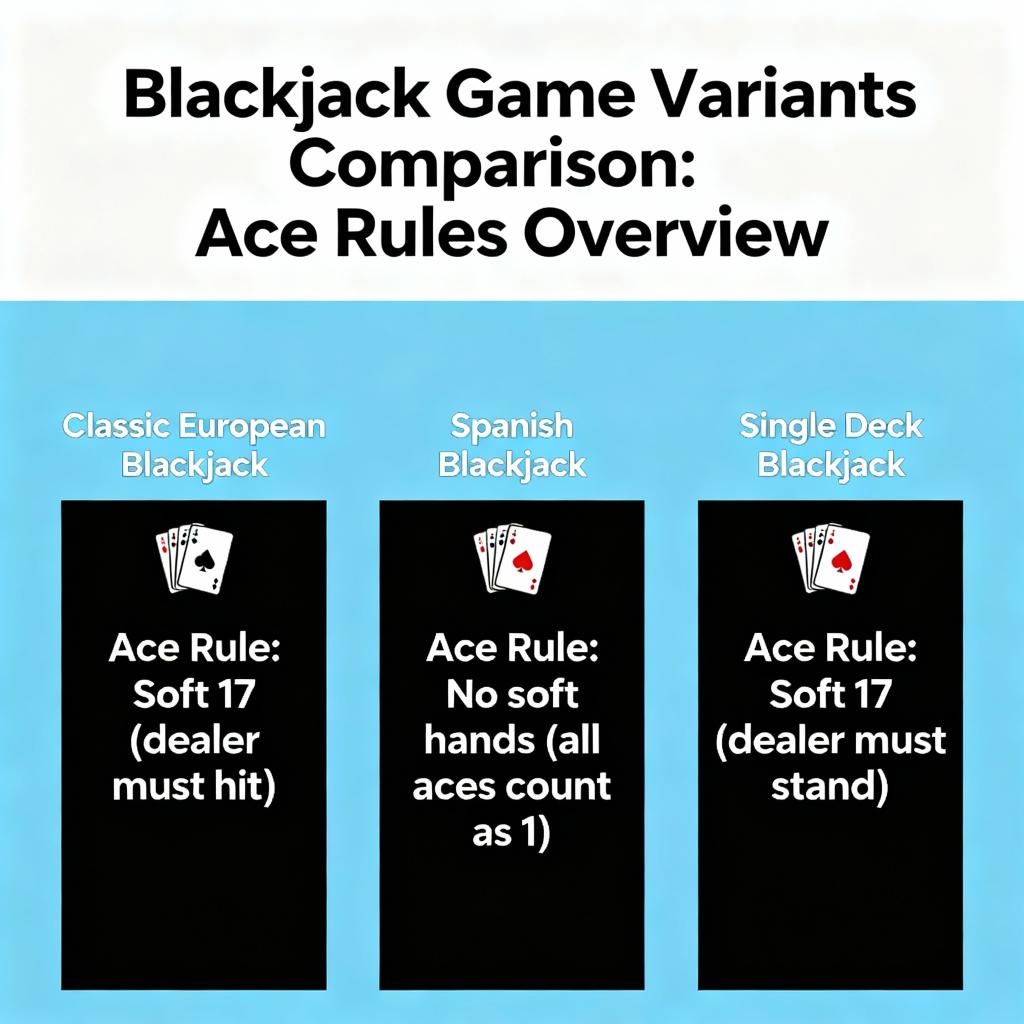
Not all blackjack games treat Aces the same way:
Game Variant Ace Rules Key Differences Classic Blackjack: Ace = 1 or 11; you can split Aces. Standard rules European Blackjack: Often no resplitting Aces; only 1 card per split. More restrictive Spanish In Spanish 21, aces always count as 11; bonus payouts are for ace combos. Player-friendly Double Exposure Dealer’s Ace must be 11 if it helps them. Favors the house Single-Deck Blackjack Higher chance of landing Aces Best for card counters
Debunking Myths About Aces

- Myth: “Aces are always worth 11.”
- Truth: They adjust to 1 if needed to prevent busting.
- Myth: “You should never hit on a soft 18.”
- Truth: If the dealer shows 9, 10, or Ace, hitting may be correct.
- Myth: “Splitting aces guarantees two blackjacks.”
- Truth: You still need a 10-value card on each Ace (31% chance per card).
FAQs: Expert Answers to Ace-Related Questions
1. Can you change an ace’s value mid-hand?
- Yes, the game automatically adjusts it based on your total.
2. Can you resplit Aces if you get another one?
- Most casinos don’t allow it, but some (like in Las Vegas) do.
3. What if the dealer has an ace showing?
- Assume they have blackjack (~30% chance) unless proven otherwise.
4. Should you hit on Soft 17?
- Depends on the dealer’s upcard:
- Hit if the dealer shows 7-Ace.
- Stand if the dealer shows 2-6.
Conclusion: Mastering the Ace for Maximum Edge
The ace is the most versatile and powerful card in blackjack. Knowing when to:
✔ Split Aces for double winning chances
✔ Double down on soft hands for bigger payouts.
✔ Avoid insurance traps against dealer Aces.
…can dramatically improve your long-term results.
Pro Tip: Practice these strategies in free blackjack games before playing for real money. The more you understand Aces, the more control you’ll have over the game.